
How to Prepare Your Dog Before Baby Arrives Without Making Home Feel Chaotic
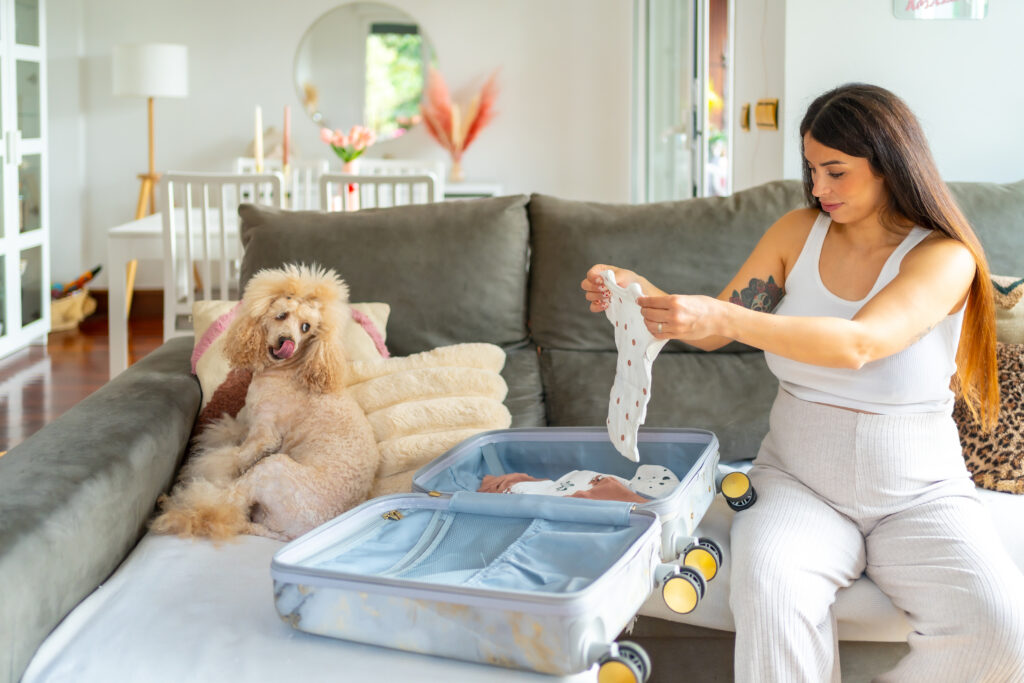
Preparing your dog for a baby requires gradual routine changes, scent and sound introduction, and boundary-setting well before the due date. Dogs adjust most smoothly when changes happen incrementally over weeks or months rather than all at once when the newborn arrives home. Starting early is the single most consistent factor in a calm transition.
Your dog has no idea what’s coming. You have nine months to help them handle it.
Your dog has been the center of your household for years. Same walk time, same feeding schedule, same spot on the couch. Then a newborn arrives and every single one of those things shifts simultaneously — the schedule, the attention, the smells, the sounds, the rules. All at once.
Dogs don’t do well with all at once.
The families whose dogs transition smoothly almost always did the same thing: they started preparing months before the due date, not days. Small changes, introduced gradually, so the dog’s baseline stayed calm through each one. This piece covers what that preparation actually involves — and how having an experienced infant care specialist in the house gives you the bandwidth to actually follow through on it.
Change the Routine Before the Baby Changes It for You
The first thing to work on isn’t obedience commands or baby gates. It’s the daily rhythm.
Your dog’s anxiety is largely managed by predictability. Walk at 7, eat at 8, quiet time in the afternoon — that structure is what keeps them regulated. A newborn dismantles it completely, and a dog who’s never experienced an unpredictable schedule will feel that disruption acutely.
Start varying the routine now. Walk at different times on different days. Adjust feeding windows slightly. Introduce small gaps in the attention your dog gets from you, so that less contact doesn’t arrive as a shock associated with the baby. A Denver Newborn Care Specialist handling overnight care means someone is available during the day to keep the dog’s routine intact — walks still happen, the dog still gets time, and the adjustment doesn’t quietly collapse under the weight of everything else.
Your Dog Needs to Meet the Baby’s Smell Before the Baby
Smell is how your dog understands the world. A newborn’s scent — baby lotion, formula, diapers, the specific smell of a new human — is completely foreign to them. If the first time they encounter it is when you walk through the front door holding the baby, it lands as a sudden intrusion into their established territory.
Fix this before birth. Put baby lotion on your hands during the third trimester. Set up the nursery furniture early and let the dog investigate it calmly. A few weeks before your due date, borrow clothing or a blanket from a friend’s baby and let your dog sniff it — with a treat nearby so the association is neutral or positive.
When the baby is born, send a worn hospital blanket home before you arrive. By the time you walk in with the baby, the smell already exists in your dog’s world. Not as a threat. Just as a thing.
Sounds Are Easier to Prepare for Than Most People Think
An infant crying at 3 a.m. is alarming. Your dog doesn’t know what it means, can’t do anything about it, and may respond with barking, pacing, or anxiety that makes the whole house worse.
You can prevent most of that with ten minutes a day for a few weeks. Play recordings of infant sounds — crying, fussing, the white noise machine — at low volume while your dog is relaxed. Gradually raise the volume over days. Pair calm behavior with treats. By the time the real thing arrives, the sounds aren’t novel. They’re just background.
It’s the same principle as introducing the stroller. Walk your dog with an empty stroller weeks before birth, with treats for calm behavior beside it. The stroller is one of the pieces of baby equipment dogs most commonly react to with anxiety or aggression — a moving object that takes up space and moves unpredictably. An empty stroller is easy to desensitize. A moving stroller with a baby in it, encountered for the first time, is not.
Set Boundaries Early So You’re Not Enforcing Them Under Pressure
If the nursery is going to be off-limits, that rule needs to exist before the baby does.
A dog who has always had access to every room and suddenly finds one closed off the week the baby comes home associates that restriction with the baby. It creates exactly the wrong dynamic — the new arrival as the reason good things disappeared. Set the baby gate now. Close the nursery door now. Enforce the new geography of the house for weeks before there’s a newborn inside it.
The first actual introduction deserves the same calm preparation. Have your partner carry the baby inside while you greet the dog first. Let them settle before anyone moves toward the baby. Keep the dog on a leash for the first meeting, let them observe from a few feet away, reward quiet and relaxed behavior, and end the interaction before the dog gets overwhelmed. The goal isn’t a sweet moment. The goal is uneventful.
Conclusion:
A dog who transitions well to a baby isn’t a lucky accident. It’s the result of weeks of small, patient preparation that made every new thing slightly less new by the time it arrived. Start early, go slow, and keep the routine as intact as you can during the newborn period. If you’re building out postpartum support in Denver and want someone who can help hold the household together through the adjustment, start the conversation here.
FAQ:
When should I start preparing my dog for a baby?
As early in pregnancy as possible — second trimester if you can. Changes to routine, boundaries, and scent introduction all take weeks to become familiar. The more runway you give your dog, the less they have to process all at once.
How do I introduce my dog to a newborn for the first time?
Have someone else carry the baby inside. Greet the dog first, let them calm down, then bring them into the room on a leash. Let the dog observe from a short distance before moving closer, reward calm behavior, and don’t force contact. Keep it brief and uneventful.
My dog gets anxious around new things. Should I be worried?
Not necessarily, but it does mean preparation matters more for your dog than it might for others. Slow introductions, positive associations, and a trainer consultation before the baby arrives are worth the effort if your dog has a history of anxiety or reactive behavior.
Will my dog feel neglected after the baby comes?
Most dogs do get less attention after a baby arrives — that’s just the reality. What helps is keeping the routine as consistent as possible and making sure the time they do get is genuinely engaged rather than absent-minded. Even twenty minutes of focused interaction matters more than three hours of half-present coexistence.
